INTRODUCTION
Planning for the six-year Capital Improvements Program (CIP) involves three significant factors:
Identification of Needs
Demand for capital investment is based on community needs as identified directly from citizens through Citizens' Advisory Board public forums or other public meetings, by program departments, or the Maryland-National Capital Park and Planning Commission (M-NCPPC). Demands are also driven by demographic trends and land use plans in the growth and development of the County.
Readiness for Programming
Effective capital investments require careful thought and adequate public participation. While it may be necessary on rare occasions to program placeholder costs for a critical project, generally detailed facility planning is completed before funds are programmed for a project. Large or complex projects may be included in the CIP with funds for design only, to allow further clarification of project cost prior to including construction costs in the CIP.
AFFORDABILITY
The County government's ability to afford capital facilities is largely based on economic factors that affect the wealth of the community, measured in resident income and property value. Affordability is also influenced by variations in outside revenue sources such as Federal and State funding. In addition, the Charter requires the Council to set specific spending affordability guidelines (SAG) for both long-term debt issuance and annual operating budget spending. In setting these guidelines, the Council weighs taxpayer sentiment on taxes versus services, and strikes its policy balance between operating programs and capital investments. These factors, in turn, determine the fiscal capacity of the County government to provide facilities to meet the demand for new or additional services according to adopted fiscal plans and policies.
The following sections briefly describe these components of CIP planning, as well as other related activities or concepts which contribute to CIP planning. These descriptions are followed by a discussion of the demographic trends and economic factors which play an integral role in the identification of needs.
IDENTIFICATION OF NEEDS
Needs Identified by the Community
In the Summer of 2017, the five regional Citizens' Advisory Boards hosted capital facility needs forums to seek resident input on the up coming Capital Improvements Program (CIP). Resident priorities for capital projects identified at these forums were conveyed to the County Executive and departments, and were considered in the development of departmental project recommendations.
Needs Identified by Agencies and Departments
Capital facility planning efforts are ongoing in numerous agencies and departments, frequently based on functional plans, master plans, or agency standards. Following is an illustrative list of capital facility planning efforts:
- Comprehensive Water Supply and Sewerage Systems Plan;
- Water Resources Functional Plan;
- Countywide Comprehensive Implementation Strategy (Stormwater Management);
- National Pollutant Discharge Elimination System (NPDES);
- Municipal Separate Storm Sewer System (MS-4) Permit Program;
- Community Policing Strategy;
- Master Plan for Fire, Rescue, and Emergency Medical Services;
- Ten-Year Solid Waste Management Plan;
- Comprehensive Master Plan for Educational Facilities;
- College Facilities Master Plan;
- FY2017-2020 Strategic Plan for Public Libraries;
- Vision 2030 Strategic Plan for Parks and Recreation in Montgomery County, MD;
- Recreation Facility Development Plan 2010-2030;
- Parks and Recreation Open Space (PROS) Plan; and
- Park Master Plans; and
- Department of Corrections Master Confinement Study
Needs Identified by the M-NCPPC
The Maryland-National Capital Park and Planning Commission (M-NCPPC) submits a list of projects it proposes for inclusion in the CIP. These priorities are conveyed to the relevant departments and agencies of the government and are considered in the development of Executive recommendations.
Public Hearings on the CIP
Following transmittal of the Executive's Recommended CIP, and after the public has had time to study the programs, the County Council holds public hearings. Individuals may express their views on specific capital projects to elected officials at these public hearings or in writing. These public hearings are usually scheduled in February. To find out more about the Council public hearings on the CIP, and to register to testify, interested persons may call the Council Office at 240.777.7803. The public may also find information about Council sessions at www.montgomerycountymd.gov, view hearings on television or on the web via video streaming, or attend Council worksessions on the CIP.
Open Budget
Montgomery County Maryland offers a comprehensive Open Data Budget Publication that takes the very complex and detailed data found in the traditional budget publication and transforms it into an intuitive, accessible and shareable format. Features included are:
- Interactive charts, tables, maps and videos
- A Custom Google Search Engine
- Archiving Previous Years' Data / Content
- Unlimited Sharing/Discovery of data, tables and visualizations
- Mobility (works on smartphones, tablets and desktops)
- American with Disabilities Act (ADA) Compliance
- Instantly translatable into 90+ languages
For more, please visit the following web site:
montgomerycountymd.gov/openbudget
Subdivision Staging Policy
The Subdivision Staging Policy is a Countywide planning tool to manage the location and pace of private development and identify the need for public facilities to support private development. It is designed to affect the staging of development, matching the timing of private development with the availability of public facilities. It constrains the number of private subdivision approvals to those that can be accommodated by existing and programmed public facilities.
In order to guide subdivision approvals under the Adequate Public Facilities Ordinance (APFO), the Subdivision Staging Policy tests the adequacy of four types of public facilities: transportation; schools; water and sewerage facilities; and police, fire, and health services.
General Plan, Master Plans, and Sector Plans
The General Plan Refinement of FY94 recognizes the importance of establishing priorities for the provision of public facilities. One objective is to give high priority to areas of the greatest employment and residential density when allocating public investment. Some County master plans, such as Germantown, Great Seneca Science Corridor and the White Oak Science Gateway include phasing elements which provide guidance about the timing and sequence of capital facilities. Recent expansions of Holy Cross and Adventist hospitals and the National Cancer Instititute, as well as planned expansion by the Food and Drug Administration exemplify growing employment and the need for continued public investment in these areas.
Maryland Economic Growth, Resource Protection and Planning Act
The Maryland Economic Growth, Resource Protection, and Planning Act requires local governments to review all construction projects that involve the use of State funds, grants, loans, loan guarantees, or insurance for consistency with existing local plans.
For the FY19-24 CIP, the County Executive or the requesting agency affirms that all projects which are expected to receive State financial participation conform to relevant plans. This language appears in the "Other Disclosures" section of the relevant project description forms.
During the Council review process, the Planning Board comments to the Council and a final determination as to consistency of projects with adopted County plans is made by the County Council. The Council adopts the CIP and approves a list of applicable State participation projects.
READINESS FOR PROGRAMMING
Facility Planning
In many instances throughout the programs of the CIP, the Executive has not supported the inclusion of a project on a stand-alone basis, but has instead recommended its inclusion in a Facility Planning project. Generally, Facility Planning serves as a transition between strategic planning (overall needs assessment, review of major options, and choice of best method of programming to meet the need) and the inclusion of a stand-alone project in the CIP.
The text in all Facility Planning projects is standardized to the extent possible, and most Facility Planning projects include a list of candidate projects. Facility Planning is intended to generate a clear definition of need and scope, and develop a cost estimate that is subject to minimal change.
Cost Estimating
After a period of declining construction costs, it appears that construction costs may be rebounding. As a result, some projects are projecting market-driven cost increases. Costs related to local laws and practices for storm water management, prevailing wages, and overhead costs have also been included in projections. County agencies continue to fine tune their procurement practices to encourage competition and foster cost efficiency. Large or complex projects which require carefully coordinated staging or collaboration between governmental and other parties and projects that are unique and have unusual special requirements can be particularly challenging to estimate. Given fiscal constraints and significant capital needs, County agencies will continue to look for ways to provide projects more cost-effectively, including opportunities to enter into public-private partnerships when it is cost-effective.
Cost estimating strategies have been evolving over the past several years to address these uncertainties, and focus on controlling quality and scope, budget and schedule, and improving communication. Sometimes projects are recommended for design only as a means to gain greater stability in costs over the six years of the CIP. Following this process, projects will be in a more effective position to use available resources. Cost benchmarking, value engineering, and project scope reviews are also used as a means to control costs.
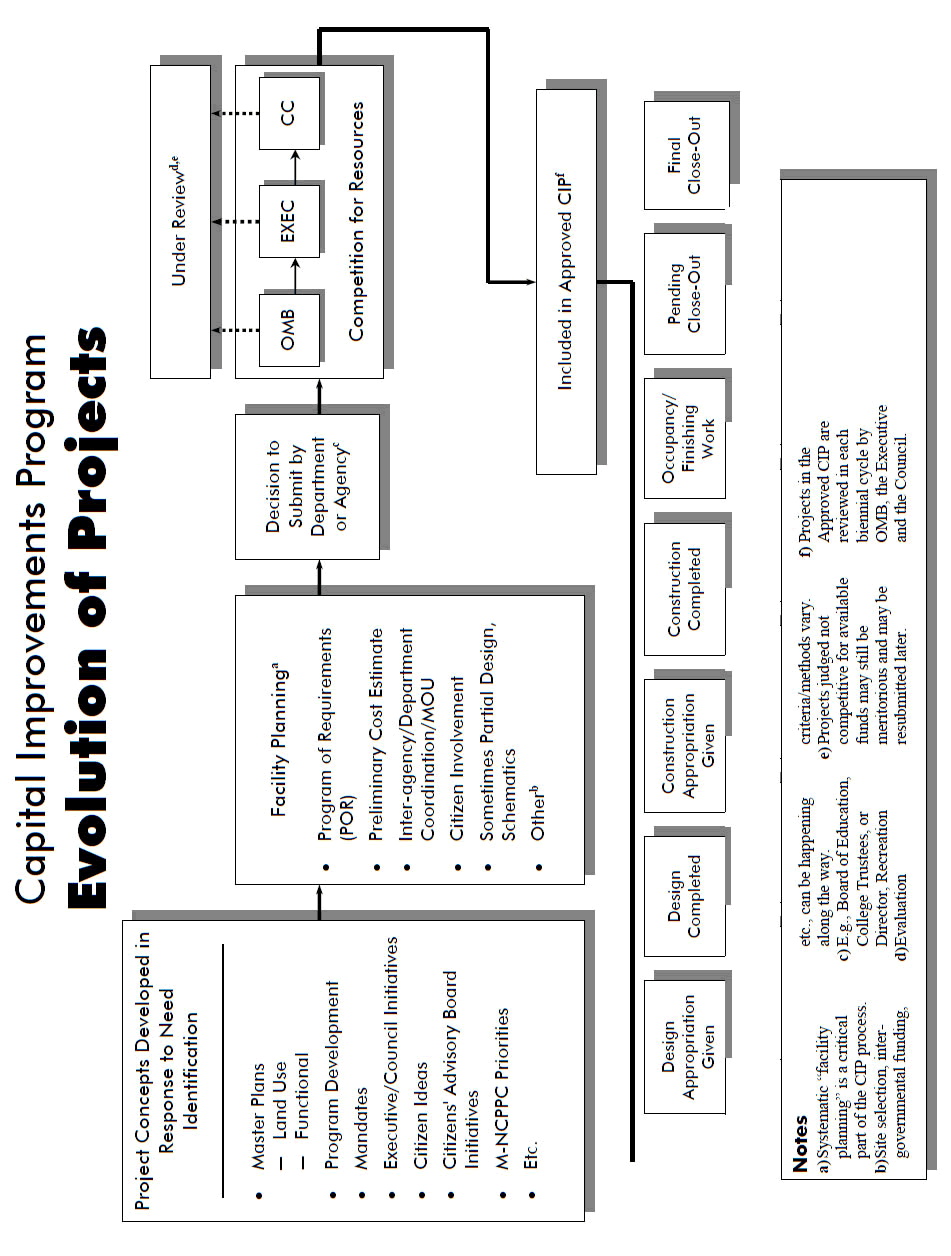
The chart located at the end of this chapter displays in more detail the process by which a capital project evolves.
AFFORDABILITY
Fiscal Planning
County Executive and Council decisions regarding the affordability of proposals to meet community needs are generally made in the context of established fiscal plans and fiscal policies. The CIP is a major tool for multi-year fiscal planning, covering capital expenditures and their funding for all County agencies. This fiscal planning process is intended to:
- provide a multi-year fiscal framework, to complement the annual operating and capital budget processes;
- improve communication with the public regarding fiscal options and plans; and
- improve the integration of the PSP/Operating Budget and the CIP/Capital Budget with respect to fiscal and workforce level planning, fiscal and program policy planning, fiscal and collective bargaining planning, and fiscal actions by the County and at the State level.
Components of the fiscal projections are used to advise the County Council in its consideration of Spending Affordability Guidelines for both the CIP/Capital Budget and PSP/Operating Budget. They are used by the County Executive as well, in macro-level fiscal decision-making related to the CIP and PSP.
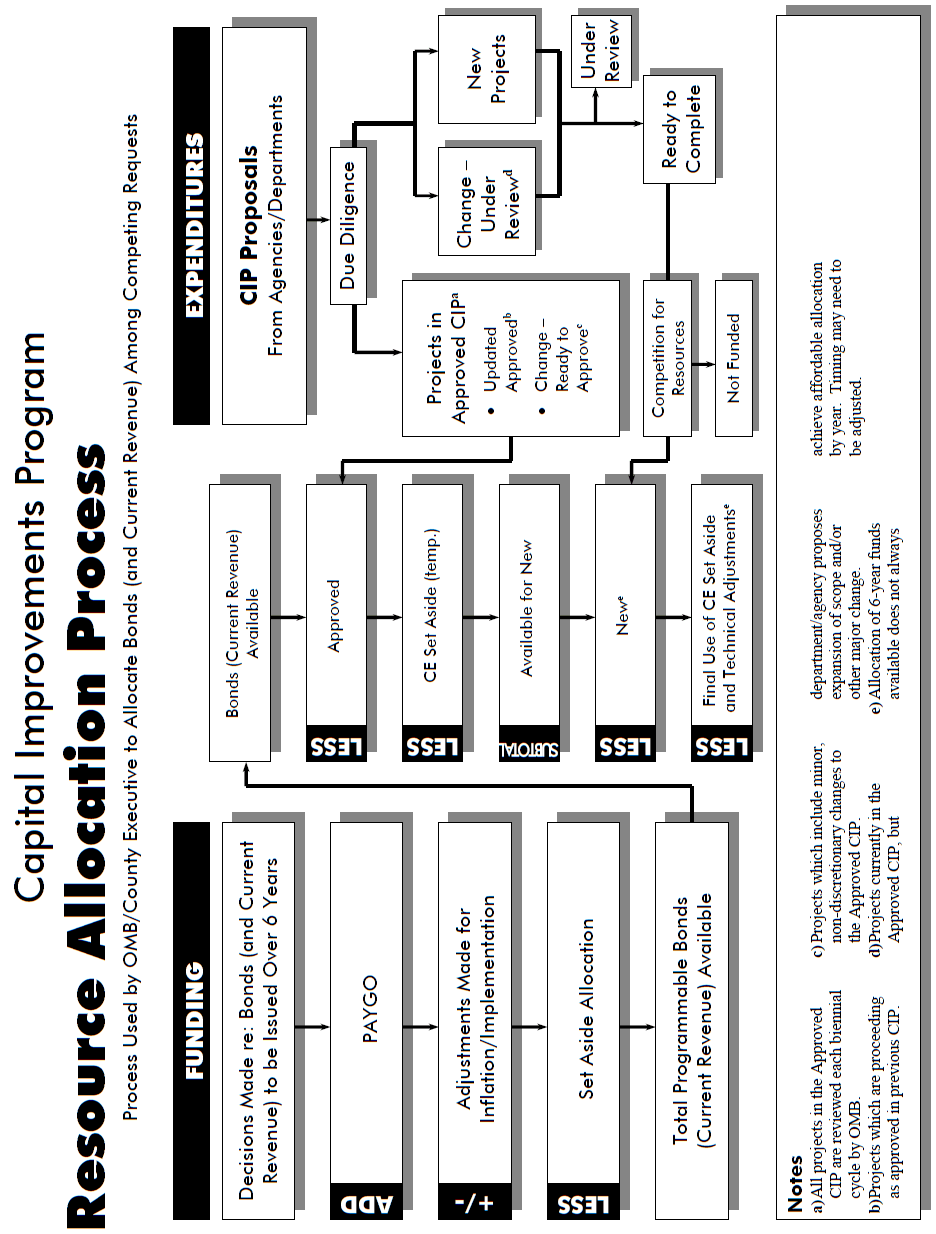
The chart on the following page describes the process currently used by the Office of Management and Budget (OMB) and the County Executive to allocate scarce resources among competing proposals.
Fiscal Policy
Fiscal policy is the combined practices of government with respect to revenues, expenditures, and debt management. Fiscal policy for the CIP focuses on the acquisition, construction, and renovation of public facilities and on the funding of such activities, with special attention to long-term and other borrowing. It is integral to CIP Planning in order to:
- encourage careful and timely decisions on the relative priority of programs and projects;
- encourage cost-effectiveness in the type, design, and construction of capital improvements;
- assure that the County may borrow readily for essential public improvements; and
- keep the cost of debt service and other impacts at levels affordable in the operating budget.
For more information, please refer to the Fiscal Policy section of the CIP.
Operating Budget Impacts
Operating Budget Impacts (OBI) of the capital program represent a significant portion of future operating budget growth related to increased population, households, commercial activity, and resulting demands for public services. Most capital improvement projects generate future operating budget costs. On the project description forms, OBIs show the incremental costs implied by the CIP project over (or under) the current year's Operating Budget.
Debt service, which reflects the cost of financing large project expenditures funded by bonds, is the most significant operating budget impact of capital projects. Approximately ten percent of the current operating budget pays for the debt service requirements of prior CIP decisions.
New facilities add annual expenditure requirements for maintenance and energy costs for utilities such as heating and lighting. Facilities that are used as sites for service delivery have staffing requirements and may have other program costs, such as vehicles. Within specific CIP programs, OBI may influence whether the County should defer a particular proposal or reduce its scope so as not to further pressure annual operating budgets.
Investment in new buildings or renovations may also result in operating cost savings, as when a new County building replaces leased space or when renovations result in operating efficiencies, such as lower energy consumption. New facilities, such as swimming pools, may generate offsetting revenues from program fees, which provide additional government revenues to help support new costs.
CIP project description forms (PDFs) include a section that identifies knowable operating budget impacts that will be incurred as a result of project implementation during the six-year CIP period. The purpose of assessing and displaying these operating budget impacts is to:
- Project the future operating budget consequences of approving projects;
- Provide a quantitative basis for cost decisions relating to the inclusion, scope, or funding schedules of projects;
- Provide a basis for prioritization of projects within program areas of the CIP based on comparative operating budget impacts;
- Provide a framework for evaluating alternatives other than CIP proposals for meeting program or service delivery needs;
- Display the extent to which identified program needs or approved standards of service delivery drive the County's capital program; and
- Display the relationship between CIP project expenditure schedules and the timing of anticipated new or additional operating budget requirements as a result of project completion.
The OBI section of specific project description forms identifies the following impacts:
Maintenance - Facility maintenance costs for public buildings are based on maintenance cost experience with different kinds and amounts of space. Maintenance costs include janitorial services, ongoing building and grounds maintenance, and repairs.
Energy - Energy costs are distinguished from other utilities (such as telephone and water) in order to assess the costs of electricity and fuels for heating, air conditioning, and other power requirements. In a project for a renovated or expanded facility, there may be an energy cost savings resulting from more efficient systems.
Program Costs - Staff - Staff costs are those incurred in the use of the facility: the salaries and benefits of additional County personnel required to open and operate a new facility, such as a library or recreation center. If a facility is expanded to include a larger or additional program, only the costs of additional staff for that expansion are included.
Full Time Equivalent (FTE) - This is the actual count of additional (or decreased) Full-Time Equivalent (FTE) employees required to staff a new facility, beyond those already budgeted by the department(s) using a given facility.
Program Costs - Other - These include the net increases or decreases in all non-staff expenses associated with opening a new, expanded, or consolidated facility, such as vehicles, consumables, contracted services, computerization, and any other general operating expenses such as telephones, that can be estimated for the year in which the facility becomes operational.
Cost Savings - Significant operating budget cost savings occur when a new public building replaces leased space. The current annual (budgeted) lease cost no longer required is an offset savings.
Offsetting Revenues - Some facilities, notably those for recreation programs, generate revenues from charges for services such as swim or golf course fees. Since revenues are an offset to costs, the estimated revenues from the facility are shown as a negative number.
The Resource Allocation Process Chart is located at the end of this chapter.
DEMOGRAPHICS AND ECONOMIC DATA FOR CIP PLANNING
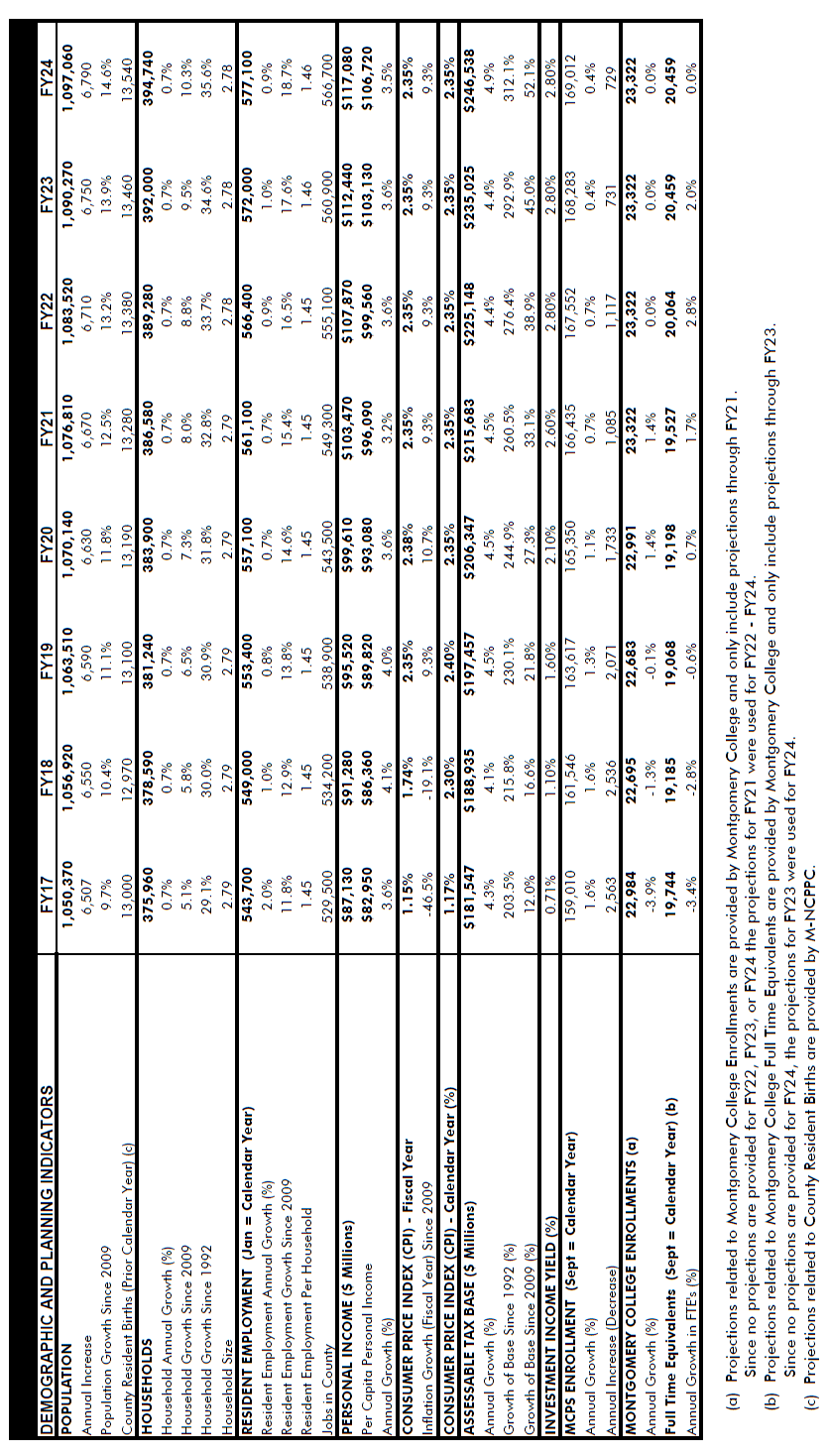
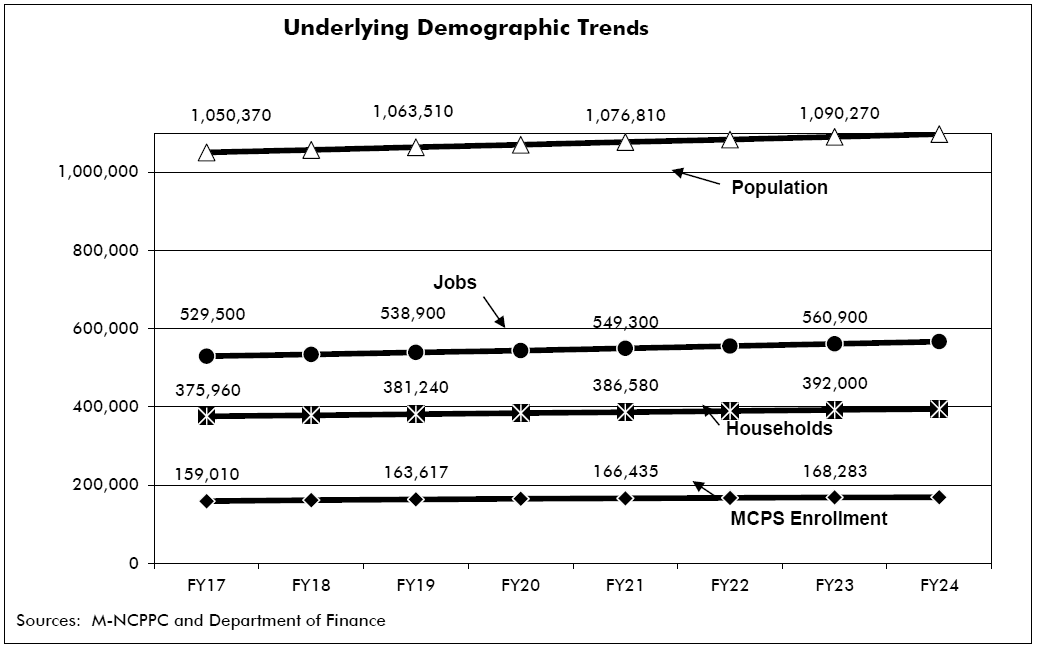
Requirements for new or enlarged public facilities (such as roads and schools) are usually generated by population growth and new housing and businesses. Demographic changes, from the age of County residents to the arrival of new immigrants into the County, also play a part in determining facility needs. At the same time, the incomes of County residents and the value of their property affect the fiscal ability of the government to provide new services and finance the construction of new facilities.
The Montgomery County Public Schools (MCPS) CIP, for example, is affected by birth rates and the location of new housing. Park and recreation facility needs are shaped by the age, cultural interests, and location of user populations. The reader is encouraged to obtain and read the program planning documents of various departments and agencies for more information on how different demographic and economic factors affect a particular service. Demographic and economic planning data may also be viewed at http://www.montgomeryplanning.org/research/data_library/census/2010/.
Demographic and Housing
Maryland-National Capital Park and Planning Commission (M-NCPPC), working with the Washington Metropolitan Council of Governments (COG), develops cooperative forecasts for the County and neighboring jurisdictions.
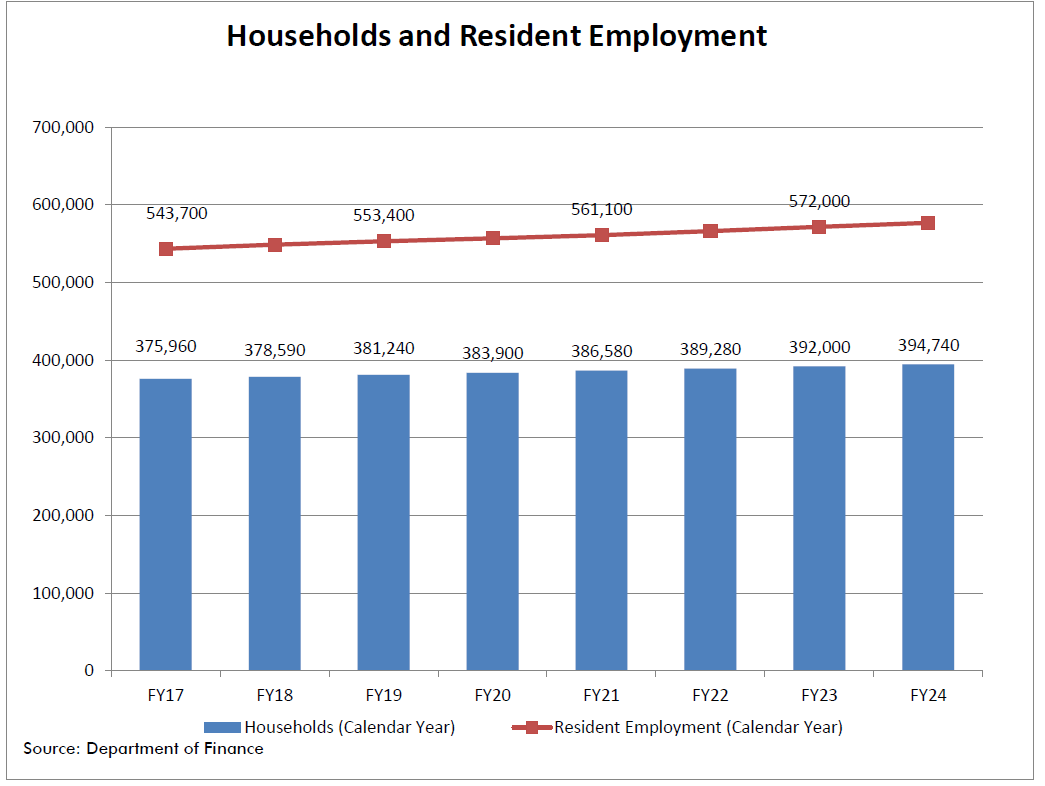
Housing Units and Households - Demand for many public services, such as fire, transportation, environmental protection, police, and water and sewer is based at least as much on the number of houses as on population.
Population and Birthrates - Population projections are based on household projections, with adjustments for trends in household composition, birth rates and mortality, immigration, and emigration trends.
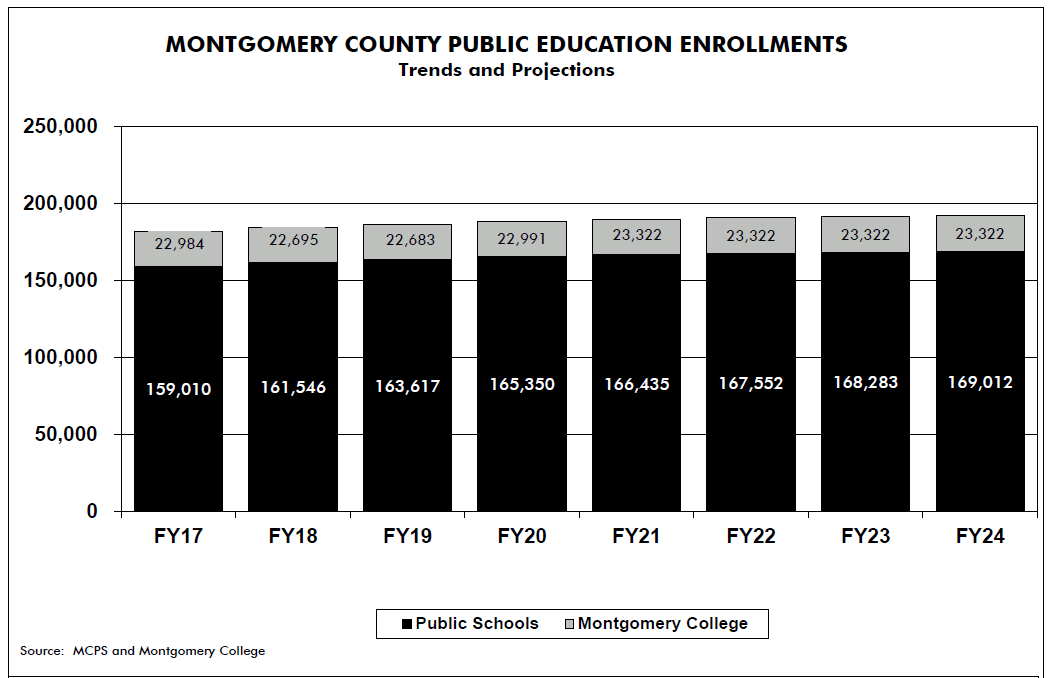
School Populations - In addition to school facilities, the impact of growth in the school-age population increases the need for recreational and transportation facilities.
Age and Workforce - Some service needs are related to the age of the population as a whole, or specific age groups, for example the needs of retirees including the impact of the Baby Boomers (persons born between 1946 and 1964).
Geographic Distribution - The capital construction program must respond to specific and changing needs of individual County geographic or planning areas, business districts, and neighborhoods.
U. S. Census Statistical Areas - As a result of regional population growth indicated by the 2000 census, the Federal Government created a Combined Metropolitan Statistical Area (CMSA) which incorporates the previous Washington and Baltimore Metropolitan Statistical Areas (MSA). The Washington - Baltimore Combined Metropolitan Statistical Area (CMSA) is the fourth largest metropolitan area in the United States. Effects on CIP planning may include adjustments to various formulas for the distribution of Federal grants and other aid and the setting of Federal "fair market" rental levels for assisted housing units.
The Economy and Economic Development
The County's capital investment is aimed in part at ensuring the strength and competitiveness of the local economy. CIP projects support and implement the redevelopment of Wheaton, White Flint, Great Seneca Science Corridor, White Oak, Burtonsville and Long Branch; the improvement and replacement of infrastructure in other commercial areas; the growth of medical and biotechnology industries near major Federal health and medical facilities; the provision of inexpensive and convenient public parking, as well as extensive public transit serving commuters and retail and business enterprises; and the availability of a broad range of housing choices.
Assessable Property Tax Base - The assessable base reflects the taxable value of all property in the County, as determined by State assessors in a three-year cycle. The financing of the County's Capital Program depends in large part on property tax revenues. The County Charter limits annual increases in property tax revenues to the rate of inflation plus taxes obtained from new construction or changes in property use, unless approved by a unanimous vote of nine Council members to exceed the limit.
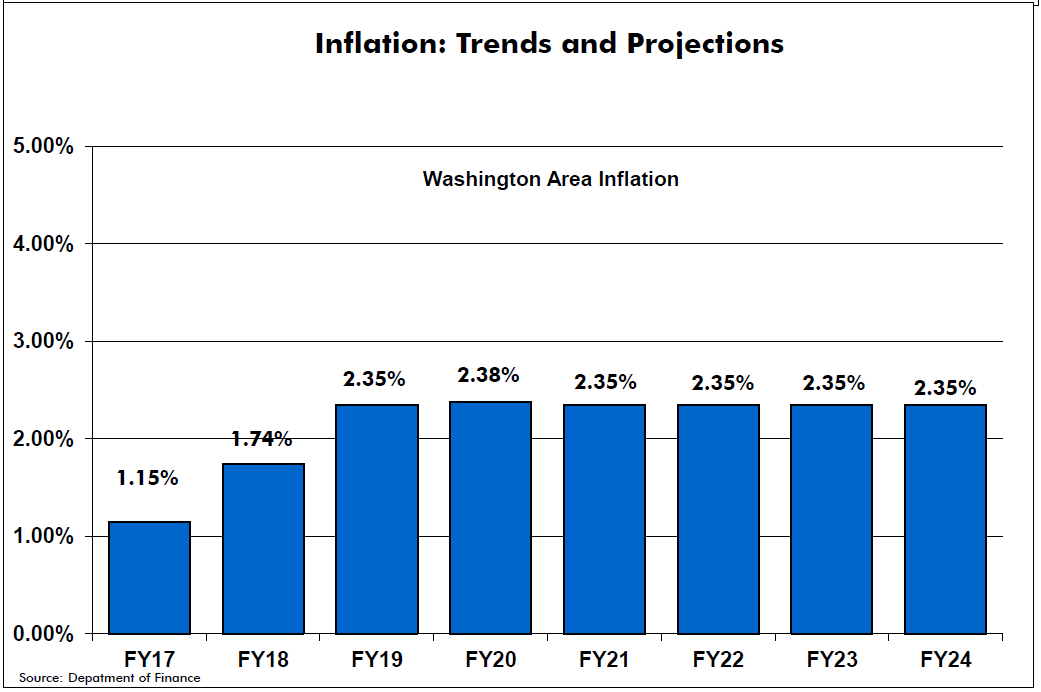
Inflation - The rate of inflation affects CIP planning in two primary ways: the effect on project costs which must be absorbed within limited resources; and the effect on projected debt capacity, which is determined in part by estimated increases from property tax and other revenues available for debt service. Inflation is measured as the CMSA Consumer Price Index (CPI).