up
Budget Year / Version:  

Introduction

In accordance with the County Charter, I am submitting my Recommended FY27 Capital Budget and FY27-32 Capital Improvements Program (CIP). This recommendation totals $6.6 billion, a $634.1 million, or 10.6 percent increase from the prior approved CIP. This final CIP of my administration includes major investments in school construction and delivers on my commitment to advance the County's climate change goals; deliver essential community assets in new libraries, recreation centers, police and fire stations; invest in essential transportation improvements; and advance critical economic development initiatives to secure the tax base. To address these needs, my recommended CIP assumes $340 million in bonds planned for issuance in Fiscal Year 2027 (FY27), increasing by 3 percent ($10 million) each year thereafter to ensure the debt issued keeps pace with inflation.

Leadership Through Unprecedented Times

Since I became County Executive, we have faced many challenges, including a global pandemic, shifting to remote and hybrid work, rising construction costs, systemic racism, an affordable housing crisis, and increasing hunger and homelessness. Over the last eight years, we've also dealt with two Trump Administrations, which led to Federal shutdowns, workforce reductions, deregulation of polluters, and cuts to social safety net funding.

My administration has risen to these challenges. Despite the odds, we have made major investments in affordable housing, implemented the County's Climate Action Plan, advanced Bus Rapid Transit (BRT), launched significant economic development initiatives like the University of Maryland Institute for Health Computing, and proposed the County's first Tax Increment Financing plan to boost investment in the East County economy. We integrated equity and climate change assessments into our capital budget decision-making to ensure resources align with our community's values.

During the COVID-19 crisis, we worked quickly to open a new homeless shelter in record time, ensuring our most vulnerable residents remained housed during this challenging period. We have completed the Clarksburg Fire Station, the 6th District Police Station, and the Silver Spring Recreation and Aquatic Center. We have invested substantially in school construction, opening 10 new or rebuilt schools including 3 high schools, and 11 school additions. Under my leadership, we also advanced other long-awaited community projects such as the Clarksburg Library, Western County Recreation Center, and the Diversion Center. Continuing this progress depends on the major investments proposed in my Recommended FY27-32 CIP.

Challenges

This recommended capital budget does not address all of the community's needs. The Board of Education's record request, totaling $2.8 billion, represents a more than $1.03 billion increase over the prior approved CIP. Because funding for new County projects is limited, we must keep using older infrastructure longer, which costs more to maintain. Meanwhile, our capital dollars do not stretch as far as they once did. The destabilizing impact of tariffs in 2025 is evident in cost increases for numerous projects in the recommended CIP I transmit to you today.

Compounding these issues is uncertainty around Federal aid for discretionary grants. In addition, the $1.03 billion requested increase for school construction comes as State aid for school construction decreases by $40.7 million, the Maryland Built to Learn program ends and projects qualify for less State aid due to enrollment declines. The Maryland-National Capital Park and Planning Commission (M-NCPPC) also anticipates losing $20.2 million in State Program Open Space funding due to declining transfer tax revenue.

Impact Tax revenues, which support the capital budget, continue to decline due to policy choices made by the County Council and economic changes in the real estate market.1

1Since the year 2020, the County Council has passed four bills resulting in reductions and deferrals in Impact Tax collections: Bills 38-20, 25-23E, 16-24, and 22-24E.

The County's ability to invest in essential capital improvements - such as schools, roads, parks, and public facilities - is largely reliant on our capacity to borrow funds through the issuance of General Obligation (GO) Bonds, which are debt securities backed by the full faith and credit of the Montgomery County Government. The County's annual GO Bond Spending Affordability Guidelines limit has hampered our ability to adequately address our infrastructure needs. Capped at $280 million per year since FY23, our bond issuances have not kept pace with inflation. In fact, as far back as FY09, the County authorized $300 million in General Obligation Bonds per year.

To sustain the same purchasing power that we had in FY09, the County would need to issue more than $550 million annually today. Though the County Council voted to raise the Spending Affordability Guidelines to $300 million per year in September 2025, this is not enough to sustain even the existing projects programmed in our CIP, let alone address our school construction needs or deliver new community-serving public safety, libraries, recreation, and transportation improvements. The chart below illustrates this point.

Limited GO Bond Capacity for New Projects

Not adjusting GO Bond levels to account for inflation, coupled with higher construction bids, has resulted in chronic underinvestment in critical infrastructure. As shown below, if left at the County Council approved Spending Affordability Guidelines of $300 million per year, the spending required to support existing projects such as road resurfacing, sidewalk replacement, and major building system replacement, and to complete capital projects already underway would fully use available capacity, leaving no room for new projects or the Board of Education's requested increase for school construction.

Increasing Investments to Secure Our Future

Recent spending affordability decisions have focused on reducing the annual level of general obligation debt to reduce the rate of growth of debt service. That restraint, coupled with growth in General Fund revenues, has resulted in a substantial improvement in the County's debt capacity metrics. For the first time in 15 years, our debt service to General Fund revenues ratio has fallen near the County's self-imposed policy guideline of 10 percent. This means that we have created much needed additional capacity due to the fiscal restraint exercised in the first six years of my administration. We now have flexibility to increase the County's debt limit to meet our County's growing infrastructure demands.

The recommended CIP assumes $340 million in bonds planned for issuance in FY27 and grows at a rate of 3 percent (or $10 million) each year thereafter, totaling $2.19 billion over six years. This recommendation returns debt issuance in FY27 to the level approved nearly a decade ago in fiscal year 2018 and helps ensure that the debt we issue keeps up with inflation. Under this scenario, our affordability metrics look better than they have in years due to the strength and resilience of Montgomery County's economy, General Fund revenue growth over time, and our conservative approach to issuing debt. In addition, my recommended CIP increases the Pay-As-You-Go (PAYGO) allocation by $47.8 million over six years, aligned with the County's 10 percent fiscal policy target.

To fund the County's capital needs, including those of Montgomery County Public Schools (MCPS), enhanced borrowing capacity is essential. The proposed increase to $340 million in FY27, with measured annual growth, thereafter, will provide necessary resources to address longstanding infrastructure deficits and support critical investments in education and public facilities without compromising the County's strong fiscal position. It is in line with Governor Moore's initiative to increase state bond issuances to allow the State of Maryland to keep pace with facility demands and inflation.

Other Funding Sources

I have generally postponed making decisions on increased Current Revenue requests until they can be evaluated in the context of the County's operating budget, which I will introduce in March. I am allocating $109.4 million in tax-supported Current Revenue appropriations to support critical infrastructure priorities in the capital budget in FY27.

Impact Tax revenue projections continue dramatic write-downs for the third year in a row. For FY27-FY32, Impact Taxes are projected to decrease $61.5 million (36.3 percent) compared to prior approved estimates. In Fiscal Year 2014, the County collected $60.8 million in school and transportation Impact Taxes, compared to Fiscal Year 2025 collections totaling only $29.4 million, a reduction of $31.4 million or 51.6 percent. The Council continues to pass legislation eroding this important revenue source without first identifying a feasible replacement.

Recordation Tax and Recordation Tax Premium projections reflect a nominal increase over the six-year period as housing sales and volume remain aligned with previous projections.

The recommended CIP also leverages non-County funding from the Federal and State governments. Overall, Intergovernmental Revenue decreases $185.5 million due largely to a shift in the use of State Bus Rapid Transit Fund to finance Bus Rapid Transit projects ($127.2 million) and a reduction in State Op Lanes Funding ($119.8 million) as the State works to identify a definitive funding path for the American Legion Bridge which results in a change in the amount and timing of State aid for related County projects. Other changes in State and Federal aid include a reduction in State aid for school construction as funding from the Built to Learn program concludes ($40.7 million) and the anticipated loss of Program Open Space funding supporting M-NCPPC projects ($20.2 million).These decreases are offset by increases in Federal Transit Administration Capital Investment Grant funding for BRT ($96 million) and Federal aid for transportation and the Affordable Living Quarters project ($35 million).

Short- and Long-Term Financing increases in this recommended CIP by $138.3 million, driven largely by State Bus Rapid Transit Funds now leveraged to finance BRT improvements.

Northern Virginia's Transportation Funding Model

Additional resources are essential to advance important investments in transportation, enhancing mobility around the County, supporting economic development, and improving safety for pedestrians, bicyclists, and drivers. While regional competitors race ahead, implementing transportation improvements to provide congestion relief in Northern Virginia, we are hamstrung by constrained resources.

Northern Virginia communities understood the critically important role of transportation in planning for their future. To that end, they worked with State partners to increase the Northern Virginia Sales and Use Tax by 0.7 percent, to impose a 2 percent Hotel Tax, and to impose a Congestion Relief Recordation Tax of $0.10 per $100 valuation of the property sold, with revenues dedicated exclusively to transportation improvements. Of these funds, 70 percent is dedicated to regional projects addressing congestion mitigation, emergency evacuation, or mass transit that increases mobility in the region The remaining 30 percent is distributed to individual localities in Northern Virginia that enact the local Commercial and Industrial Property Tax of $0.125 per $100 valuation of assessed value or dedicate an equivalent amount to support urban or secondary road construction, capital investments that reduce congestion, other capital transportation projects approved in the long-range transportation plan, or in public transportation projects.

In Fiscal Year 2026, Fairfax County's transportation funding benefits significantly from this dedicated revenue stream, including approximately $61.8 million annually from the Commercial and Industrial Property Tax. This stable, recurring funding supports key priorities, including Fairfax Connector bus operations, road maintenance, and other improvements throughout Fairfax County.

In addition to these revenues, our regional competitors can invest in important community infrastructure due to revenues raised through numerous special taxing districts that Montgomery County does not benefit from. As illustrated below, Fairfax County's tax and fee structure includes assessments for numerous special tax districts to ensure sufficient funding to construct and support assets serving the community.

In FY26, the combined $11.25 million in annual revenues from special transportation service districts, including about $8.71 million from the Tysons Service District (funding grid streets, intersections, and transit in the urbanizing Tysons area) and $2.54 million from the Reston Service District (supporting roadways, bikeways, and transit-oriented projects), enable targeted investments in high-growth corridors without broader tax increases. Together, these sources help sustain Fairfax's multi-billion-dollar transportation pipeline amid ongoing development pressures.


We must identify new revenues as Northern Virginia did to plan for regional growth, provide transportation choices, and increase accessibility. This will improve our economy and strengthen our tax base. In March, I plan to introduce a Transportation Special Taxing District to allow us to accelerate projects that move the needle on our most critical transportation investments.


Investments in Policy Priorities


Education

I recommend funding for MCPS totaling more than $2.1 billion, a $380.0 million increase over the prior approved CIP. This is the largest ever recommended CIP for our school system, and increases local funding by $420.8 million, despite a $38.7 million decrease in school impact taxes. Importantly, this recommendation adds $282.5 million in local funding in the first four years when funding for projects underway or ready to begin is most urgent.

A Nearly $1 Billion Gap Threatens Our Ability to Meet School Facility Needs

The MCPS Board of Education's Requested FY 2027-2032 Capital Improvements Program proposes a $1.03 billion increase over the previously approved six-year period. If programmed expenditures remain aligned with historical Spending Affordability Guidelines, even the enhanced County Council-recommended General Obligation Bond capacity limited of $1.8 billion would create a shortfall over $900 million compared to the requested amount. Without further expansions in GO Bond capacity or other funding adjustments, our County risks falling short of addressing the school system's identified infrastructure and facility needs, and I urge proactive measures be taken to bridge this gap and ensure our students have the facilities they deserve.

State Action Is Essential to Close the School Capital Gap

From FY19 through FY26, more than 96 percent of the Board of Education's (BOE) six-year capital funding requests were ultimately approved and programmed by the County Council, reflecting our shared commitment to educational infrastructure. Considering the ongoing capital needs of our school system, however, even with my proposed increase to $340 million in GO Bonds for FY27, followed by $10 million annual growth thereafter, local funding sources remain insufficient to meet the need. My recommended budget will still fall $652 million short of the school system's request. To ensure adequate funding amid Statewide enrollment declines, additional State aid and reforms to the State funding formula are essential.

Following nearly three decades of steady growth, MCPS enrollment decreased by 2,641 students in the 2025-2026 school year compared to the previous year. This follows a decline of 1,041 students in the 2024-2025 school year compared to 2023-2024. Projections for future enrollment indicate continued gradual decline to 149,706 students by the 2031-2032 school year, 6,835 fewer students than the 156,541 enrolled today.

For decades, significant growth in enrollment required MCPS to focus on providing additional capacity at the expense of replacing essential building systems. This year, the Board of Education's request focuses on replacing major building systems to maintain buildings in a state of good repair and in making major renovations in older buildings that remain in operation.

This enrollment trend is not unique to MCPS. Statewide, student enrollment decreased 1.3 percent in the 2025-2026 school year. It is therefore essential that the State adjusts the funding formula, to better reflect the needs of local education agencies.

Prioritizing Direct Student Impact in the CIP

My recommended CIP drives resources to projects that directly benefit students, funding 87.2 percent of MCPS requests supporting academic facilities. Items not supported by my recommendation include the Carver Educational Service Center (CESC), artificial turf fields, inflation for level of effort projects, additional capacity at Eastern and Sligo Middle Schools, or the Sligo Creek Elementary School Replacement project.

The CESC project as proposed requires $223.3 million in County funds in the six-year period with an expected total cost of $428.3 million, though the Board of Education is exploring a public-private partnership to offset this cost. In addition, commercial office properties are currently available in the area at reduced cost due to a shift in demand related to remote and hybrid work. The Board of Education should fully explore both options before dedicating local resources to this project.

Likewise, funding for artificial turf in the Outdoor Play Space and Athletic Infrastructure project is removed from my recommendation due to risks associated with concussion, knee and ankle injuries, heat-related illness, and the impact on the environment. Additionally, the artificial turf installation and replacement costs are higher than for grass fields. The short- and long-term costs to the health and well-being of our students and the impact on our environment outweigh the immediate benefits of lower maintenance costs and increased field availability. Funding to replace those fields with natural grass was left in the project.

For level of effort projects, the CIP already holds aside capacity for inflation in projects funded with General Obligation Bonds. Programming inflation for level of effort projects as requested by the Board of Education would duplicate capacity already reserved for these projects.

My recommendation also excludes funding to raise capacity at Eastern Middle School to 1,516 students. This number of seats significantly exceeds the preferred number of students for middle schools, which ranges between 750 to 1,200 students. Funding to renovate the school remains in the budget.

Similarly, I do not recommend funding additional seats at Sligo Middle School which would grow to 1,208. I firmly believe middle schools should be smaller for an effective transition from elementary to high school. I also recommend that site selection and replacement of Sligo Creek Elementary School wait until the planned elementary school boundary study is completed so that all available options to balance enrollment across the system are understood and considered. Additionally, projects that increase capacity should be evaluated against declining enrollment projections.

Finally, I agree with the Board of Education's decision not to move forward with the planned closure of Silver Spring International Middle School at this time. This decision must be made with full community engagement and transparency, following the Board of Education's prescribed process.

Montgomery College

The recommended Montgomery College CIP totals $445.3 million, a $34.9 million or 8.5 percent increase, the largest ever recommended allocation for Montgomery College. The Montgomery College request advances the Germantown Student Affairs Building Renovation and Addition - Phase 2 project, which adds $35.1 million to the six-year period. Planning work on the East County campus continues to establish a fourth campus in the East County, which I fully support. The College anticipates site selection for the East County campus will occur in spring 2026, with design anticipated in FY28 and construction beginning in FY29. The college request also includes a new Collegewide Road/Parking Lot Repairs and Replacements project to ensure that College parking lots, roadways, walkways, and associated infrastructure are maintained in a state of good repair, funded by the College's Transportation Facilities Capital Projects Fund.

Due to affordability constraints, my recommended CIP returns the Rockville Theater Arts Building Renovation project to the schedule I recommended in the FY25-30 CIP, with construction beginning beyond the six-year period. The current schedule as proposed would require substantial State funding for two large projects at once, which is likely not achievable. Decisions on increases in cash funding for the CIP, including new projects for the Capital Asset Management System: College and Collegewide Security Systems, are not recommended until they can be evaluated in the context of the FY27 Operating Budget.

Transportation

Consistent and reliable transportation is essential for the County's continued economic growth and quality of life. This budget invests in transportation in a way that enables the realization of our master plans and gives our residents easier commutes, more choices on how to travel, and greater safety. By providing new transportation options and expanding the County's zero emission bus fleet, we are also leading the nation in climate-friendly transportation.

Mass Transit

The CIP's investment in mass transit promises to improve the County's quality of life, economic vitality, and sustainability. The budget adds $262 million to advance three Flash Bus Rapid Transit (BRT) lines into construction. With this investment, our Department of Transportation is building an interconnected BRT system that improves daily life for residents, expands access to economic opportunity, and strengthens community connections through reliable, efficient transit. The budget continues to fund construction for Veirs Mill Road BRT and MD 355 Central BRT, projects that leverage anticipated Federal funding to transform these critical corridors. Transit improvements on MD 355 will include a new Lakeforest Transit Center, which will serve a major mixed-use development project and facilitate travel for thousands of passengers in Gaithersburg. This budget also funds final design and construction of U.S. 29 BRT Phase 2, which will provide dedicated median lanes to improve the speed and reliability of Flash service on this important East County transportation corridor. These major transportation initiatives will connect residents across the Montgomery County with reliable, accessible transit - meaning efficient connections to jobs, education, entertainment, and healthcare.

The State continues to struggle with a solution to provide Marylanders with a sustainable means to fund transportation priorities. The Maryland Department of Transportation Consolidated Transportation Program restored funding for several critical safety projects in 2027, including Montgomery Hills/MD 97, but has not identified a definitive funding path to replace the American Legion Bridge or for the Washington Metropolitan Area Transit Authority's (WMATA) long term capital needs. My recommended budget seeks to make impactful investments in transit, bridges, and roadways, even with uncertainty on some of the State's largest projects. State legislation that would give localities more flexibility to fund transportation investments has yet to pass. The budget incorporates funding committed by the State to support BRT and other transit priorities, including funding dedicated from the State BRT Fund and funding from managed lanes associated with a future American Legion Bridge project. The timing of the latter remains uncertain.

Roads

After hearing from hundreds of residents each year about the importance of road condition, I recommend increased funding to maintain and rehabilitate our roads, bridges, and sidewalks, adding $240 million for the rehabilitation, resurfacing, and permanent patching of primary/arterial and residential/rural County roads. The budget also adds $6.5 million to maintain and expand streetlighting infrastructure to increase safety and allow more people to walk comfortably, especially around schools and bus stops.

Bridges

Bridge preservation, rehabilitation, and replacement is a major component of maintaining the County's transportation network. The budget leverages Federal infrastructure funding to add $37.8 million for County bridges. New bridges include the Burnt Hill Road Bridge, Greentree Road Bridge, Parklawn Entrance Bridge, Valleywood Drive Bridge, and Zion Road Bridge. The budget also includes a new project to support work on Park Bridge Improvements, while funding for maintenance of park roads will be shifted to Montgomery Parks.

Pedestrians and Cyclists

We are expanding our facilities for pedestrians and cyclists. The budget adds new funding to continue investments in bike and pedestrian projects, including Bicycle-Pedestrian Priority Area Improvements along the Purple Line corridor, which leverage State grants. I have also added funding to complete important standalone projects, including Bethesda Bikeway and Pedestrian Facilities, the Capital Crescent Trail, Dale Drive Shared Use Path, Fenton Street Cycletrack, and MacArthur Boulevard Bikeway. In addition, the budget adds $4.3 million for curb and sidewalk replacement. These investments connect schools and employment centers to help more people safely and sustainably reach their destinations.

In addition to these projects, this budget continues to fund investments in safety studies and implementation of their recommendations to bring us closer to our Vision Zero goals.

Strategic Transportation Investments, Innovation, and New Revenue to Drive Growth

The County will take advantage of Federal grants to make our parking facilities more sustainable and resource efficient. In Silver Spring we will install new public electric vehicle charging infrastructure, and we will expand an Advance Digital Construction Management System that uses technology to more efficiently design, build, and maintain parking facilities.

The budget focuses on projects that can advance economic development and climate goals, address critical safety needs, and leverage limited State and Federal resources. That means some projects are delayed, including Forest Glen Passageway and Summit Avenue Extension. These changes are necessary to allow greater fiscal capacity for MCPS capital maintenance, and to account for cost increases due to tariffs and inflation. Additionally, major transportation priorities, such as Observation Drive Extended, and the further buildout of the BRT network including projects on MD 355 South and New Hampshire Avenue, cannot move forward without additional funding.

Making real progress on these and other critical transportation projects will require us to explore new, dedicated revenue sources. In March, I plan to propose a Transportation Special Taxing District as a funding mechanism to increase our investments in projects that will move the needle on economic development. My priority with this approach is to raise these revenues from commercial properties that will benefit from these infrastructure investments while minimizing the financial burden on County residents. Dedicated funding for transportation will also ease pressure on our limited capital resources, paving a way to fund other infrastructure priorities.

Transportation is essential to meet the current needs of our residents, and this budget makes strides to improve the condition of our assets and to advance our priorities related to safety and climate. Our economy and opportunities depend on the maintenance and upgrades of our existing multimodal transportation system. Implementing even more transformational projects that offer new connections and unlock growth potential is also critical if we want to successfully compete for opportunities in the region, especially in the current challenging economic circumstances.

Affordable Housing

My recommended CIP continues my strong commitment to advancing affordable housing options in Montgomery County, investing $160.0 million over the six-year period. This builds on the more than 4,500 affordable housing units the County has invested in creating or preserving since FY23. This funding enables the county to continue partnering on projects that produce meaningful affordability for residents.

Major decisions regarding investment in Affordable Housing, including additional funds to support financing assistance for the production and preservation of affordable housing in the County, will be considered in conjunction with the operating budget.

Community Development

The recommended CIP budget supports continued investments in community development projects that make physical improvements to neighborhoods and commercial areas, improving the quality of life for County residents. The Countywide Facade Easement Program revitalizes commercial areas by supporting small businesses and encouraging private investment by funding the installation of new facade materials, center and tenant signage, exterior building and parking lot lighting, safer walkability, increased energy efficiency, outdoor landscaping, murals, and other permanent art features. The County received $600,000 in State grant funding for the facade improvement program in FY26, furthering the impact of our County investment which I will transmit as a March amendment.

To date, the Troubled and Distressed Common Ownership Communities Program has issued two loans for a combined amount of $1 million and provided preliminary commitments for three additional loans totaling $1 million. Applicants to this program are experiencing financial hardship in their efforts to address immediate health or safety repairs in common areas that could lead to condemnation. Many applicants may not qualify for conventional loans or lack adequate finances to address these serious issues. Continued CIP investment in this program will support the County's Common Ownership Communities continue to age.

Housing Opportunities Commission

For the Housing Opportunities Commission (HOC), this recommended CIP continues to support $7.5 million in Supplemental Funds for Deeply Subsidized HOC Owned Units Improvements. In March, I will transmit an amendment to appropriate $750,000 in recently awarded State aid for the demolition of the former Elizabeth House Apartments. This funding may reduce HOC's need for additional support to complete this work. Major decisions on cash requests from HOC will be held for consideration with the operating budget.

Economic Development

My recommended CIP also includes significant investments in public-private partnerships designed to spark redevelopment in North Bethesda and White Oak.

North Bethesda Redevelopment

The recommended budget envisions the North Bethesda Metro property as the centerpiece for the creation of a new life science and technology business hub. This property is the largest remaining undeveloped parcel on the Metro system and is located strategically between the National Institutes for Health, Food and Drug Administration (FDA), and the Shady Grove Life Science Hub.

Metro has selected Hines, a global real estate investment manager, as the developer for the 14-acre development site adjacent to the rail station bringing our County one step closer to a transformative new life sciences anchored development, with the North Bethesda Metro station as its gateway.

My administration worked aggressively to create the University of Maryland Institute for Health Computing (IHC) along with our partners at the University of Maryland College Park, the University of Maryland Baltimore, and the University of Maryland Medical System. This innovative research facility will transform life sciences research, leading to life-saving advancements in medicine and health care across the globe. The institute has grown from concept to over 130 employees. In addition to the employees of the institute itself, the IHC is expected to draw additional life science and tech companies to Montgomery County.

This capital budget invests $50 million in County funding to support a new IHC anchor building to match an anticipated $100 million capital commitment from the University System of Maryland and the State. This investment demonstrates our commitment to making Montgomery County a world leader in life sciences.

White Oak

Redevelopment of the East County is a goal that the County Council and I share. In May 2025, I announced the first-ever Tax Increment Financing (TIF) proposal to support a $2.8 billion transformative mixed-use development in VIVA White Oak developed by MCB Real Estate that will bring thousands of jobs, housing units, and new infrastructure to East County. Located on 280 acres adjacent to the FDA campus, VIVA White Oak will activate long-underutilized land with up to 12.1 million square feet of commercial, residential, retail, and public space. The current schedule anticipates a groundbreaking in the summer of 2026.

In addition, from FY27 forward, White Oak Commercial Area Improvements and Revitalization funding will support a broad range of community revitalization projects as part of the redevelopment of White Oak, including facade improvements, safety enhancements, demolition of vacant properties, and beautification projects based on community feedback.

Environment and Climate

To meet our community-wide climate goals to be carbon neutral by 2035, my recommended budget invests in the construction of Net Zero facilities, which produce enough clean energy to meet each site's energy needs, significantly reducing a building's air pollution. Leading the way on sustainability, Montgomery County is constructing many new facilities to be Net Zero, and will include resilience elements such as solar energy production, combined heat and power, and onsite battery storage. Planned Net Zero facilities include the White Flint Fire Station, 4th District Police Station, Western County Recreation Center, Clarksburg Library, and the Justice Center. Similarly, the Holiday Park Net Zero Initiative will upgrade an existing facility to achieve Net Zero energy consumption. The recommended budget also invests $36.9 million to enhance energy conservation in County-owned facilities and to support implementation of our Building Energy Performance Standards, which require buildings to meet energy efficiency standards. These investments will lead to healthier, more sustainable communities.

Zero Emission Vehicles

Despite uncertainty regarding Federal discretionary grants for zero emission vehicles, my budget continues to invest in our future climate and environmental health. Pursuing the Climate Action Plan target and our Zero Emission Transition Plan, this capital budget keeps us on track to reach a fully zero-emission bus fleet by 2035. The budget adds $40 million for an initial investment in a new transit maintenance depot, without which we will not have the capacity to power an expanded Ride On bus fleet to support new BRT services. The budget also includes $131 million to fund the acquisition of electric and hydrogen fuel cell buses to replace fossil fuel vehicles, and adds $9.8 million for an expanded hydrogen production and fueling facility in Gaithersburg, ensuring that Ride On buses support a clean environment while connecting people to opportunities.

Flooding

Flooding incidents in Montgomery County have increased in frequency and severity for several years. According to a 2011 report from the Office of Legislative Oversight, urban flooding increased from between two and four occurrences per year in the County before 2010, to 11 to 39 occurrences since 2010. The recommended budget invests $81 million to begin implementation of the Comprehensive Flood Management Plan to support the first phase of work needed to construct flood mitigation improvements in watersheds throughout the County most prone to flooding or vulnerable to future flooding. Funding is also added to complete the Comprehensive Flood Management Plan to guide these investments through analysis of watersheds throughout the County.

Revenue Authority

The Revenue Authority requests new projects to install electric charging infrastructure for golf carts at Little Bennett Golf Course and to address stormwater overflow in parking areas of the Crossvines facility.

Recreation and Libraries

Libraries

My recommended budget provides $5.7 million to build out a 7,000 gross square foot ground-floor library across from the Shady Grove Metro station through a long-term lease with the Housing Opportunities Commission. This new library will serve as a space for early literacy, technology, teen, and English language programming and will be a destination for unique and community-led programing that neighboring libraries cannot support. In addition, funding continues for the new Clarksburg Library to provide a long overdue community resource to this growing area of the County. To ensure an inviting and comfortable experience for library patrons, work to refresh and revitalize the Damascus Library through the Library Refurbishment Level of Effort project is underway, and improvements to the Brigadier General Charles E. McGee and Twinbrook Libraries are programmed for refurbishment improvements in FY27 and FY28.

Recreation Centers

Similarly, funding for cost-effective improvements to enhance the customer experience in recreation centers supports the completion of work at the Damascus Senior Center in FY27, with improvements to the Bauer Drive Community Recreation Center and Upper County Community Recreation Center programmed to begin in FY27 and FY28. In addition, funding continues for design and construction of a new community recreation facility serving the Town of Poolesville and neighboring communities in Western Montgomery County with construction beginning in FY29 and completing in FY30.

Wheaton Arts and Cultural Center

This recommended budget continues funding for the Wheaton Arts and Cultural Center, which will provide an important cultural asset in the Wheaton community. Construction to buildout performance spaces, classrooms, gallery space, back of house support space, and administrative offices on the ground floor of this combined affordable housing/County-funded arts facility is expected to conclude in FY29.

Recreational Fields and Equipment

Maintaining the County's heavily used recreation facilities in a state of good repair is central to ensuring safe spaces to support recreational programming. The existing artificial turf field at the North Potomac Community Center has reached the end of its useful life and must be replaced. My recommended capital plan provides $720,000 to replace the existing field with a new natural grass field in recognition of the environmental and health benefits of natural grass playing surfaces and the problems with artificial turf fields, which include concerns about PFAs, heat islands, disposal concerns, and expense. In addition, I recommend accelerating funds to replace essential recreational equipment and fixtures.

Public Safety

The existing 4th District Police Station is housed in an obsolete building that does not meet the needs of modern policing. Similarly, the M-NCPPC Park Police Headquarters is stationed in a repurposed elementary school and needs substantial improvements. The recommended CIP provides $40 million in the next six years to collocate these agencies on the Park Police site to leverage efficiencies and address the needs of both agencies. Design will begin in FY27 and FY28, with construction planned to begin in FY32.

The CIP provides $44.2 million to construct the White Flint Fire Station to support growth in North Bethesda with construction expected to be completed in FY29. This budget continues funding for design and construction of a new Justice Center on the site of the current Montgomery County Detention Center complex which has outlived its useful life and is costly to maintain. The new Justice Center will house central processing/detention, District Court Commissioners, the Department of Health and Human Services Mental Health Assessment and Placement Unit, Pre-Trial Services Assessment Unit, Public Defenders Unit, and the Police Warrants and Fugitive Unit in a smaller, more efficient building.

We must continue to renew aging capital equipment that supports our public safety operations. To this end, my recommended budget adds $14.8 million in short-term financing to replace outdated, self-contained breathing equipment used by firefighters and $4.4 million in short-term financing to replace obsolete police body armor.

Finally, funding to implement the new police Law Enforcement Records Management system project is moved from the Public Safety System Modernization project to a new standalone project under the Department of Police.

Preserving and Modernizing Critical County Facilities

My recommendation focuses on ensuring that our existing facilities remain in good repair as long as possible. To this end, I am enhancing funding in the Americans with Disabilities Act Compliance, HVAC Electrical Replacement: MCG, Roof Replacement: MCG, HVAC Electrical Replacement: Fire Stations, and ABS Conveyor System Upgrade projects to address cost increases for critical improvements.

In addition, my recommendation provides $5.8 million for necessary elevator improvements in the Judicial Center North Tower in FY30 and FY31. Finally, my recommendation includes a new Shady Grove Processing Facility Improvement project to support critical infrastructure at the Transfer Station including scales, scale house, administrative building, power infrastructure, and fire detection and suppression systems that were previously funded through the operating budget to better align capital eligible expenditures.

Maryland-National Capital Park and Planning Commission

My recommended CIP includes $280.7 million in six-year funding, a $33.2 million, or 10.6 percent decrease, from the prior approved CIP for M-NCPPC. The decrease is due largely to the anticipated loss of $20.2 million in State Program Open Space funding. The request also includes a new project, Parkway Improvements, to support parkway road improvements previously funded under the Department of Transportation. The recommended CIP assumes $6.4 million in affordability adjustments due to funding constraints. Decisions on requested increases that would be supported by Current Revenue will be held for consideration with the operating budget.

WSSC Water

My recommended CIP fully funds WSSC Water's $1.77 billion FY27-FY32 request. This represents a $54.9 million or 3.0 percent, decrease below the FY26-FY31 approved total of $1.83 billion. The decrease in the six-year cost is the net result of scope changes, project implementation progress, inflationary trends, and the completion and closure of projects.

Advancing Racial Equity Through Strategic Capital Investments

To incorporate a racial equity lens into the development of the capital budget, the Office of Racial Equity and Social Justice (ORESJ), in partnership with the Office of Management and Budget, implemented a Capital Budget Equity Tool (CBET) to encourage departments and decisionmakers to consider the impacts of proposed projects on racial disparities and inequities in Montgomery County. This tool provides a structured approach for identifying, analyzing, and interpreting data about racial disparities and inequities. With information from this tool, departments can adjust their project planning, design, or outreach, and decisionmakers can assess budgets based on their ability to advance priority initiatives such as racial equity and social justice.

Projects were strategically selected for assessment to maximize the impact of this work, targeting new projects and existing projects with scope or cost changes unrelated to inflation or technical adjustments. Level of Effort projects were not assessed. Responses to the CBET were assessed by ORESJ using a defined methodology, which results in a finding statement and narrative justification.

This budget proudly incorporates several projects identified by this review as having the potential to advance racial equity and reduce disparities in Montgomery County:

  • Bus Rapid Transit on MD 355 Central, Veirs Mill Road, and U.S. 29 Phase-2
  • Bus Rapid Transit Lakeforest Transit Center
  • Parklawn Entrance Bridge
  • Valleywood Drive Bridge
  • North High Street Extended
  • Burtonsville Park and Ride Improvements
  • Bicycle-Pedestrian Priority Area Improvements - Purple Line
  • Bicycle-Pedestrian Priority Area Improvements - Wheaton
  • Shady Grove Westside Library
  • 4th District Police Station and Park Police Headquarters
  • Recreation Facilities Refurbishment -Centers

However, racial equity is one of many factors that must be considered and weighed in assembling a capital budget plan. Some projects required to sustain County services are critical to complete though they may not reduce racial disparities.

Cost Escalation, Schedule Adjustments, and Scope Changes Due to Fiscal Constraints

A number of projects experienced significant cost increases due to tariffs and escalation or updated cost estimates following completion of design including the Justice Center, White Flint Fire Station, Diversion Center, Clarksburg Library, Western County Recreation Center, Wheaton Arts and Cultural Center, Capital Crescent Trail, Brink Road Bridge, Brookville Road Bridge, Garrett Park Road Bridge, Schaeffer Road Bridge, and ABS Conveyor System Upgrade.

Schedule delays based on fiscal considerations are reflected in the following projects: Rockville Theater Arts Building, Outdoor Firearms Training Center, Forest Glen Passageway, and Summit Avenue Extended. The programmed improvement cycle for Child Care Renovations - ADA Remediation is adjusted to complete one project every other year due to substantial cost increase. An ongoing Child Care Renovations - Facility Replacement project at Martin Luther King Jr. Recreational Park is fully funded for completion. Funding for future Child Care Renovations - Facility Replacement projects is removed pending an interdepartmental workgroup evaluation to determine the most expedient way to address the future facility replacement needs given unique program, site, and location constraints. In addition, the fiscal constraints resulted in a scope adjustment in Oak Drive/MD 27 Sidewalk to remove Phase III land acquisition and construction. Given the Board of Education's historic request and cost increases for projects already underway, these projects are not affordable on the requested schedule.

Supplemental Appropriation Requests

Companion supplemental appropriation requests and/or CIP amendments will be transmitted separately for the following projects: Parking Wheaton Facility Renovations, Capital Crescent Trail, Affordable Living Quarters, and Stormwater Management Retrofit: Countywide.

Conclusion

The proposals detailed in the FY27-FY32 recommendations for Montgomery County Government, Montgomery County Public Schools, Montgomery College, Maryland-National Capital Park and Planning Commission, WSSC Water, the Housing Opportunities Commission, and the Revenue Authority reflect the priorities of my administration.

Many people have helped shape the recommendations I submit to you, and I am grateful for their efforts. I thank the members of the Board of Education, the Board of Trustees of Montgomery College, the Planning Board, WSSC Water, and HOC Commissioners for their work. I also want to thank the numerous County employees who worked tirelessly to prepare the many iterations of projects that are contained in my recommended CIP. Special thanks and recognition to the outstanding staff members of the Office of Management and Budget for their work, their advice, and their creativity.


Further recommendations will be provided relating to Current Revenue and other CIP initiatives with my FY27 Operating Budget recommendations on March 16.


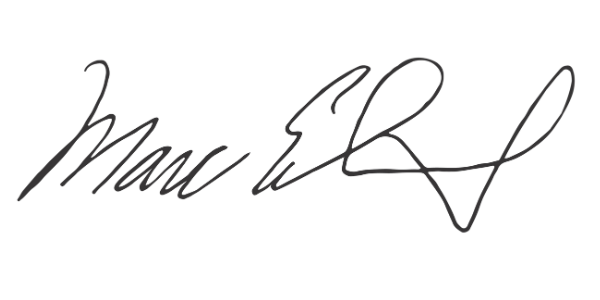
Marc Elrich
Montgomery County Executive